UK

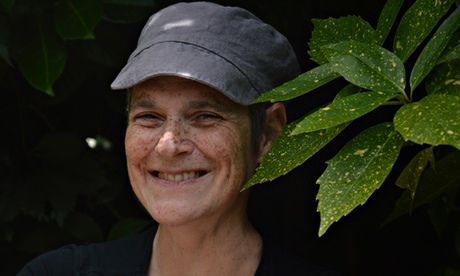
I Knew I Could Get 14 Years in Prison – Heather Pratten’s Story

“My son was terminally ill and I was the only one he could ask for help. He had no choice…”

My son was terminally ill and I was the only one he could ask for help. He had no choice. If you believe in the right to choose please support my campaign.

If you believe in the right to choose please click here & support Heather’s campaign.

Doctors Debate the Merits of the Assisted Dying Bill

BBC Newsnight  Jul 16, 2014 Dr Jacky Davis and Professor Karol Sikora debate the medical aspects of the Assisted Dying before the House of Lords which would allow doctors to prescribe lethal medication to the terminally ill.

The Assisted Dying Bill clears its first hurdle in an historic debate in the House of Lords

Lord Falconer’s Assisted Dying Bill had its Second Reading today, which resulted in 9 hours 43 minutes of debate. There were 126 speakers, a record for a debate in the House of Lords, and 64 spoke in support of the Bill, 3 were neutral and 59 spoke against. 

The Moral Imperative in End-of-Life Choice Looks Different Now

Excerpt, Compassion & Choices – “For those of us grounded in end-of-life care and choice, the earth shook this week. Did you feel it? The shaking hasn’t stopped, but the religious foundation from which aid-in-dying opponents build their strength cracked.

Tomorrow, Britain’s House of Lords will debate a bill to authorize assisted dying as a legitimate medical practice. Last week former archbishop of Canterbury, Lord George Carey, recanted his position of opposition and declared his full support. A few days later Archbishop Desmond Tutu of South Africa, perhaps the most visible symbol of moral authority in the world, voiced his own strong support for choice in dying.

The bill in Parliament is modeled on Oregon’s 20-year-old law, the Death With Dignity Act. A group of about 10 Oregonians worked for months preparing that document for the 1994 Oregon ballot. As one of those co-authors, I say in all humility that I am bursting with pride to see it put to use in Britain. Like Oregon’s law, the bill would allow a terminally ill, mentally competent adult to request life-ending medication to ensure a peaceful death. They can keep it on hand in case suffering in their dying process becomes unbearable, and they may self-administer it at a time of their own choosing. This bill differs from the Oregon model in that it would also authorize a physician to administer the medication.” Full Post On Compassion & Choices

Assisted dying bill: Lords debate underway – live updates

Follow live updates as the assisted dying bill, introduced by former Labour cabinet minister Lord Falconer, gets its first significant debate in the House of Lords.

Church Of England’s Former Archbishop Of Canterbury Announces Support Of Assisted Suicide Bill

Speaking on behalf of 60 religious leaders, he said Carey’s intervention was a breath of fresh air, adding, “I see no sanctity in suffering, nothing holy about agony.”

Huffington Post -“CANTERBURY, England (RNS) Three leading Anglicans have entered an explosive debate about whether it is permissible for Christians to allow doctors in England and Wales to administer lethal doses of drugs to terminally ill patients given less than six months to live.

More than 100 members of the House of Lords, England’s upper house of Parliament, have asked to speak on the second reading of the Assisted Dying Bill on Friday (July 18).

The bill will be opposed by Archbishop of Canterbury Justin Welby, who is expected to reaffirm the Church of England’s traditional hostility to any move that would endanger the Christian principle of the sanctity of human life.

But former Archbishop of Canterbury George Carey, who unexpectedly intervened saying it would not be “anti-Christian” to believe that terminally ill people should be allowed to die with dignity, supports the new bill.

In a short article in the July 11 edition of the Daily Mail, he said, “The fact is that I have changed my mind. The old philosophical certainties have collapsed in the face of the reality of needless suffering.”

That’s a viewpoint echoed by South Africa’s Nobel Prize-winning Archbishop Desmond Tutu.” Full Article On HuffPo

Former Archbishop of Canterbury Lord Carey says he will support legislation that would make it legal for terminally ill people in England and Wales to receive help to end their lives. He is the most senior figure in the Church of England to come out in favour of assisted dying legislation.

Now Care Minister Backs the Right to Die Bill

 As Lords prepare to vote on assisted dying, Norman Lamb says he has changed his mind and would support reforms.

My Cancer Plan: Poison In The Fridge

“I hope I live to see the passage of Lord Falconer’s bill to legalise assisted dying, but I doubt I will…”

The Guardian – “When I was first diagnosed, I was focused on cure. I took two clinical trials, plus two rounds of chemotherapy. However, when the cancer came back a year after my initial treatment, I was told I couldn’t be cured. I decided to take control, and procured a drug that is sitting in my fridge. Every now and then I take it out and have a look.

When the time comes, I will draw the line for myself. I want to be quite present, propped up in bed, having a conversation with people. I want someone to hold my hand.

There are five friends who want to be there. Over time people have opted in, opted out, and I’m just getting consistency in terms of people committing. Their being present in a room is not considered aiding and abetting, but I will need to be well enough to get the drug from the fridge, go back up the stairs and have the presence of mind to measure it out. Well enough – and brave enough.

I’ve drawn the line.

I’m assuming that because the cancer is in my liver, I will see my body filling up with fluid. My ankles will swell, my face will go yellow. That’s my line. But I can’t know the order of events. I have had days where I’ve thought: “Right, today’s the day, I can’t bloody stand it.” But it’s not really the day. Maybe I will pass the line and miss it. Maybe I have to bring the line closer.

It would be nicer to be iller and to submit to the help of people, but I can’t put anyone in that position. I have to be emotionally and physically well enough to follow through – to take a very, very difficult decision, but one I passionately believe I should have a choice over. I hope I live to see the passage of Lord Falconer’s bill to legalise assisted dying, but I doubt I will. I have very little time left. 

I don’t break the law – I’m not that sort of person. On top of everything else, you have to deal with your anxiety about doing it. Yet I did give money to a stranger for a drug that may or may not be what it says it is. I was terrified it wouldn’t arrive or would be blocked at customs. I’ve had it in the fridge for over a year now.

It’s hard, but I have to think about taking the drug. I’ve been assured that if you take the drug and then a bit of alcohol or chocolate – because the drug is very bitter – you will fall asleep and die. And that’s all I want. I don’t want to end up incapacitated, taken to the commode, turned in my bed, out of my mind, unrecognisable to myself.

I can understand people wanting to go down the palliative-care route. There is some part of me that thinks, “Oh, just submit to the care. Just allow yourself to submit to it.” (This is the route I’m going down at the moment.) They will take care of you. And I’m sure that people who are ill want the system to take care of them. But no one can guarantee I will have a good death. I’ve been told that the likelihood is I will need 24-hour care, probably sleeping for most of the time. I can see that some people might like that. And maybe, if I start taking morphine and drifting off anyway, that might be OK for me too. But I want to have the choice…” Full Article on The Guardian

Assisted Dying Bill Must Not Stall In Lords, Urges Former Lord Chancellor

Lord Falconer of Thoroton calls on supporters to vote down any attempt to pass wrecking amendment on sensitive issue.

Desmond Tutu Speaks Out In Support Of Assisted Death With Dignity

“Dying is part of life. We have to die. The Earth cannot sustain us and the millions of people that came before us. We have to make way for those who are yet to be born. And since dying is part of life, talking about it shouldn’t be taboo.

“People should die a decent death. For me that means having had the conversations with those I have crossed in life and being at peace. It means being able to say goodbye to loved ones – if possible, at home.”

Excerpt, Voice of Russia – “Tutu wrote: “Death can come to us at any age. The clearer we are about our end-of-life preferences, the easier it will be for our loved ones and our doctors. I am coming to understand the importance of having a living will or advance directive, as some people call it. I do not want artificial feeding or to be on an artificial breathing machine – I don’t want people to do their damnedest to keep me alive.” Full Article on Voice of Russia 

Excerpts, iafrica – “South Africa’s Anglican archbishop emeritus Desmond Tutu on Sunday said he supported assisted dying for the terminally ill, the day after the Church’s former leader backed a bill to legalise it in Britain.

But the Church remains officially opposed to the legislation and has called for a public inquiry into the issue.

Writing in Britain’s Observer newspaper, Tutu explained that he had been convinced by the case of Craig Schonegevel, a 28-year-old South African who suffered from neurofibromatosis and ended up killing himself because doctors were unable to end his life.

“Some people opine that with good palliative care there is no need for assisted dying, no need for people to request to be legally given a lethal dose of medication,” said the Nobel Peace laureate…

…He revealed that he had asked his family not to prolong his life artificially, and slammed the treatment of former president Nelson Mandela during his final days.

“What was done to Madiba was disgraceful,” he wrote.

“You could see that Madiba was not fully there. My friend was no longer himself. It was an affront to Madiba’s dignity.”

Full Article on iafrica

“I have been fortunate to spend my life working for dignity for the living. Now I wish to apply my mind to the issue of dignity for the dying. I revere the sanctity of life – but not at any cost.”

Excerpts, BBC – “Writing in The Observer he (Tutu) said he reveres “the sanctity of life but not at any cost”.

He also suggested that prolonging the life of Nelson Mandela had been an “affront” to his dignity.

His comments follow a U-turn by former Archbishop of Canterbury Lord Carey, who also said he would support assisted dying for the terminally ill.

The Church of England (CofE) has called for an inquiry into the issue.

In his column the 82-year-old retired Anglican Archbishop of South Africa said: “I think when you need machines to help you breathe, then you have to ask questions about the quality of life being experienced and about the way money is being spent.

Full Article on BBC

Daughter of GP: Change the Law to Stop Terminally Ill Dying in Agony Like My Mother

“In a civilised society we help people in every sort of situation but yet we are unwilling to help people in that kind of situation.  We have to realise that helping people to die is a form of healthcare. It shouldn’t be seen as a failure to give someone who is terminally ill a good death.”

London Evening Standard – “The family of a GP who championed assisted dying today backed a bill to change “inhumane” laws that stop the terminally ill from ending their lives.

Dr Ann McPherson, founder of Healthcare Professionals for Assisted Dying and patron of Dignity in Dying, passed away aged 65 at her home in agonising pain after a four-year battle with pancreatic cancer.

In the months leading up to her death, she developed an immunity to the effects of morphine, could barely move and was unable to eat solids.

As her condition deteriorated the GP, who had worked with Notting Hill actor Hugh Grant to raise awareness of pancreatic cancer, told her family she wanted to die.

Days before her death in May 2011 she wrote to a friend, saying: “I can’t understand why I have to carry on living like this — why can’t I just die?”

Today her daughter Beth Hale, 38, called on politicians to support Lord Falconer’s assisted dying bill, proposing to allow mentally capable adults, with less than six months to live, to request help in ending their lives…” Full Article Here